Welcome to May We Gather - Week 2
The Ending: Letting Go of What Was
Last week, we arrived. We introduced ourselves to each other and to this process. We named what we're carrying. We began to build a shared language for the in-between.
This week, we're going deeper into the first phase of the Bridges model: The Ending.
What Is a Ending?
When we think of endings, we tend to think of the external event — the last day of a job, the moment a relationship shifts, the day a parent dies. But Bridges makes an important distinction: the ending that matters most isn't the external change. It's the internal one.
It's the moment you realize that a version of yourself is being left behind.
Maybe you were the career woman and now you're not sure what you are. Maybe you were the child, and now you’re stepping into a caregiver role. Maybe you were someone who knew what their days would look like, and now you don't. These inner losses — the identities, the roles, the assumptions about how life works — are often harder to name than the external changes. And they're almost always harder to grieve.
Bridges writes that many of the losses in an ending "aren't concrete. They are part of the inner complex of attitudes and assumptions and expectations that we all carry around in our heads. These inner elements of 'the way things are' are what make us feel at home in our world. When they disappear, we've lost something very important — although to someone else it may seem as though nothing has changed."
That last part matters. Your loss doesn't have to look significant to anyone else to be real. You're allowed to grieve the small endings too. The routines you engaged in and the roles that you played. The version of your life you thought you were going to have.
You Are Not Overreacting.
One thing Bridges names that I find really liberating: what looks like "overreacting" to a change is often just reacting to the losses underneath it. We don't react to the change itself — we react to what the change takes from us.
And sometimes a new ending triggers old, unprocessed ones. A retirement can surface grief about a parent. A move can crack open a loss from twenty years ago. If you find yourself feeling more than you expected — more than seems proportionate — that's not a sign something is wrong with you. It's a sign that your losses are real, and that they've been waiting to be seen.
What You Might Be Feeling Right Now
Endings bring up a lot. And the feelings aren't always the ones we expect.
You might feel grief — obvious, heavy, hard to explain to anyone who hasn't been through something similar. But you might also feel relief, and then feel guilty about the relief. You might feel angry, or numb, or fine one day and completely undone the next. You might feel all of these things in the same afternoon.
All of it is normal. All of it makes sense.
And sometimes the hardest feelings aren't about the big things. They're about the small ones — the ones that seem too minor to mention. Like:
Missing your work badge, and the sense of belonging it gave you
Grieving the version of yourself who was healthy, or strong, or certain
Wanting the routine of school drop-off now that your kids are older
Feeling lost without the title that told you — and everyone else — who you were
Mourning the marriage you thought you had, or the partnership you believed you were building together — not just the relationship as it actually was
Grieving the career path you had mapped out in your head, the promotions and milestones that will no longer happen the way you imagined
Feeling unmoored on a Tuesday afternoon without anywhere you're supposed to be
Longing for the sense of purpose that came with a demanding job, even one you were glad to leave
Missing the version of yourself who felt capable and certain, before this transition made you feel like a beginner again
Mourning the mother you thought you'd be, or the parent your child needed
Grieving the business idea or creative vision that had to be set aside
Feeling the loss of a future self you had been building toward for years now that the path has shifted
These losses are all real and valid. They are worthy of our attention. In fact, the small, simple losses often carry more weight than the big ones — precisely because we've been telling ourselves they shouldn't matter.
This week, we're making room for all of it. The big grief and the small grief. The expected feelings and the surprising ones. You don't have to rank them or justify them. You just have to let them be seen.
Simple Object Ritual
Before you fill in the form this week, I want to invite you into a short ritual to help you arrive more fully in the material.
Find one object in your home that represents something you're letting go of in this transition. It doesn't have to be obvious or symbolic to anyone but you. It might be a photo, a piece of clothing, a piece of jewelry, a mug from an old workplace, a card someone gave you. Something that, when you hold it or look at it, brings the ending into focus.
Hold it. Look at it. Let yourself feel whatever comes up — without rushing past it, minimizing it, or talking yourself out of it.
Then set it down somewhere special to you — your altar if you have one, a windowsill, on a nightstand, on the table in front of you — and fill in the form from that place.
Here's an example from my own life:
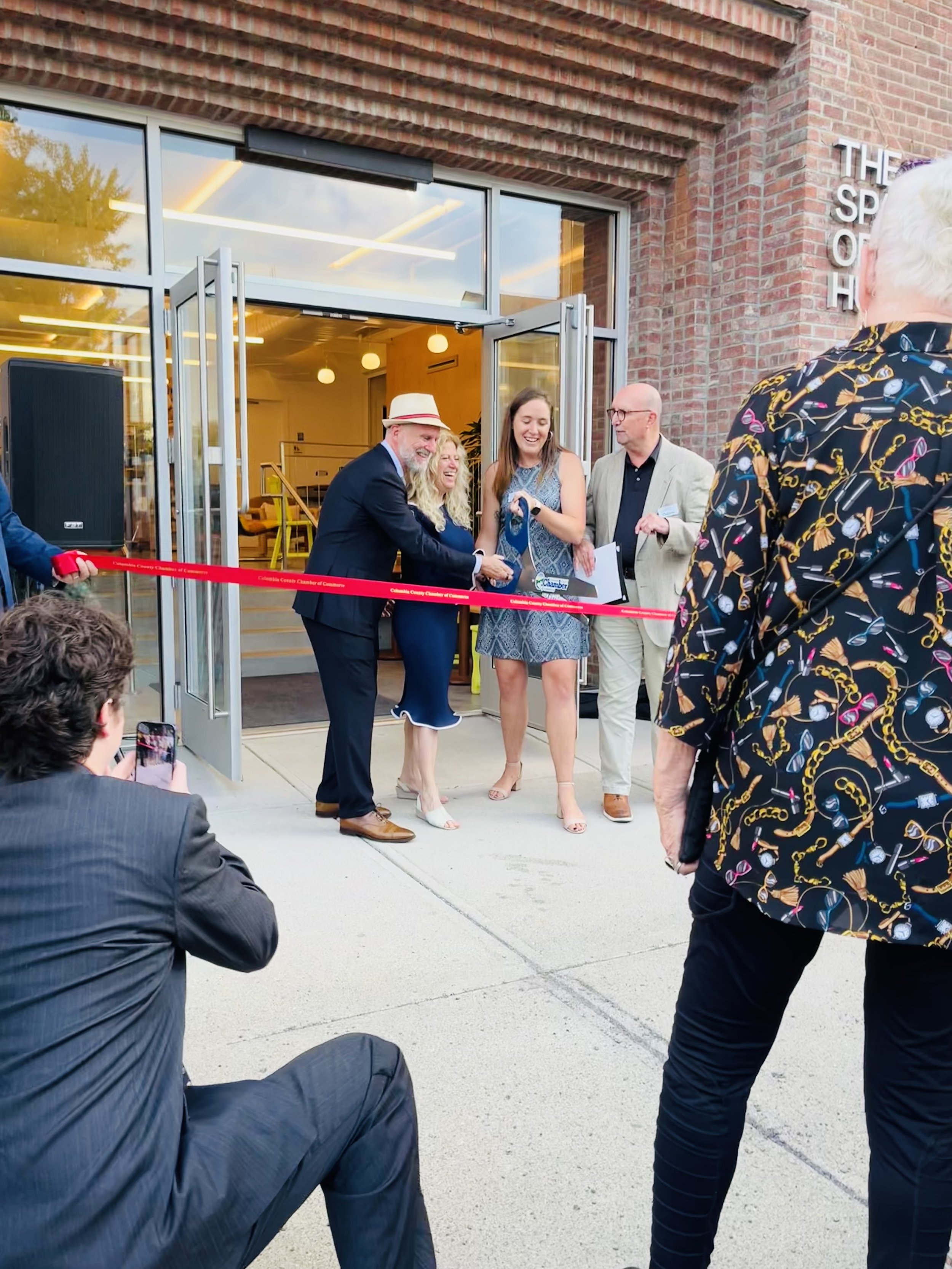
My object is a photo of me with my colleagues at the grand opening of The Spark Building in Hudson — a moment I had worked toward for years. When I look at it, I feel a longing that still gets me sometimes. Not a longing the job itself — I was genuinely ready to leave. But for what came with it: the sense of accomplishment and pride. The access to a building I loved. The title of Executive Director and everything it meant about who I was. The meetings with community leaders, the feeling of being at the table. Leading a team I loved showing up for every day.
I was ready to go. And I still grieve it. But the grief has softened significantly over the last several months. I have reflected on that time, in my journal, with my friends, and through ritual. I have honored what that role was for me. And slowly, over time, I am integrating it.