
Hi, I’m Caitie.
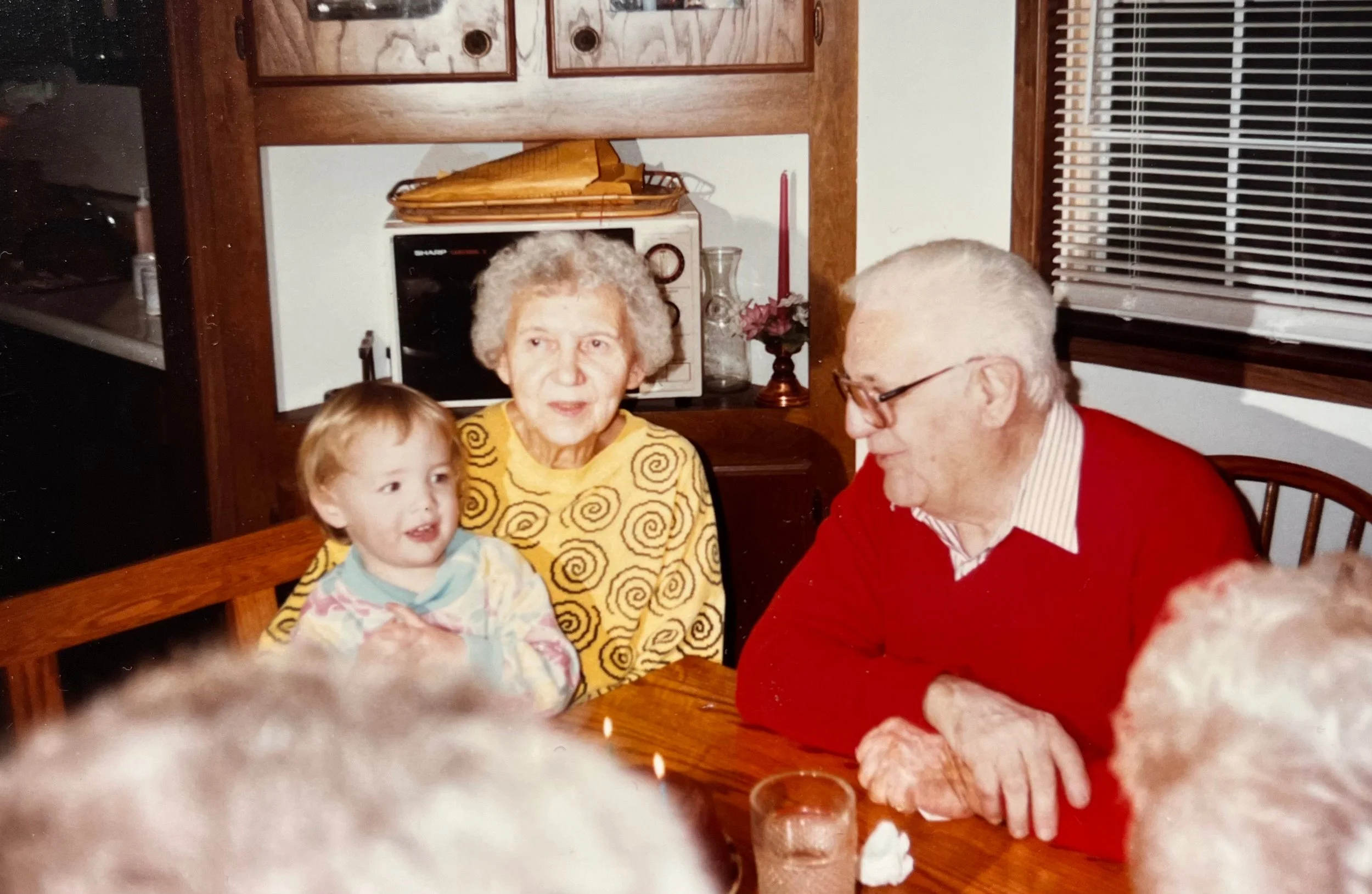
I’m a writer, facilitator, and place-rooted coach living in Hudson, New York — a city my family has lived in for six generations. I now live around the corner from where I grew up, raising two young children and spending time, often weekly, in rooms that hold four generations of my family at once. That proximity — to history, to care, to continuity and rupture — shapes everything I do.
Much of my work sits at the intersection of grief, belonging, power, memory, and change: how people live through endings, how communities metabolize loss, and how we stay in relationship with the places and people that shape us, even when things get complicated.
Through All My Dead & Living Things, I write long-form essays and reported pieces about Hudson and other small places like it — about housing and land, schools and politics, class and belonging, ancestry and erasure, love and rupture. I pay close attention to what’s usually rushed past: public meetings, quiet transitions, overlooked histories, and the emotional undercurrents beneath civic life.
Alongside the writing, I lead small-group experiences and one-on-one work centered on reflection, ritual, and meaning-making — including writing practices, grief-informed coaching, and gravestone tending. These offerings are about slowing down, treating our stories as sacred, and making room for complexity without shame.
My approach is shaped by both lived experience and formal training. I hold a PhD in psychology, completed Martha Beck’s life-coaching program, and spent a year in a somatics training called Opening to Freedom. I’m especially interested in how bodies carry history, how nervous systems respond to loss and power, and how insight becomes meaningful only when it’s grounded in real life and real relationships.
What I stand for: dignity over spectacle, curiosity over certainty, accountability without punishment, and care that’s rooted in place rather than abstraction. I believe people are shaped by their environments, their histories, and their relationships — and that most of us are doing the best we can with what we were given.
This is work for people who love deeply, notice a lot, and don’t want easy answers. It’s for those willing to stay present in the in-between — with themselves, with each other, and with the living and dead things that made them who they are.